
Romania ♛⃝𝑲ING
Artisan Experience
SEE IT → MEET THE ARTISAN → LEARN IT → MAKE IT → BUY IT → TAKE THE STORY HOME → Dedicated artisan experiences for international groups, cultural tours, DMC programs, educational travel and incentive groups can be integrated into customized King Travel Romania itineraries. From Cultural Tourism to Living Heritage — A New Group Travel Experience in the Heart of Old Europe. King Travel Romania is a Romania DMC offering Artisan Experiences for international groups, connecting travelers with local artisans, traditional crafts and Romania’s living cultural heritage.
This is not a tourism concept created on paper → EuropeX™ has already brought together artisans, cultural heritage, international creators and live cultural events. King Travel Romania turns that experience into a dedicated DMC product for international tourist groups.
We already did it → now King Travel packages it for international groups.
The Experience Did
Not Begin Today 👑
DMC Artisan Experiences — Quick Facts
What is a Romania Artisan Experience? A Romania Artisan Experience is a participatory cultural tourism program where international travelers meet local artisans, discover Romanian traditional crafts, learn a technique, create an object and experience living cultural heritage.
Who organizes the experience? King Travel Romania is a Romania DMC organizing customized artisan experiences, cultural tours and living heritage programs for international groups.
Where are the experiences available? Artisan experiences can be integrated into customized itineraries across Romania, depending on the selected region, artisan, craft and group requirements.
Who are these programs for? International tourist groups, tour operators, travel agencies, DMC partners, educational groups, incentive groups and private cultural travelers.
What can travelers do? SEE IT → MEET THE ARTISAN → LEARN IT → MAKE IT → BUY IT → TAKE THE STORY HOME.
What types of crafts can be included? Depending on the destination and artisan availability, programs can include pottery, weaving, embroidery, woodcraft, jewelry, traditional textiles and other Romanian crafts.
How are the programs organized? King Travel Romania can integrate artisan workshops, cultural interpretation, local experiences, transportation and complementary tourism services into customized Romania itineraries.
There is a fundamental difference between seeing a culture and entering it → For decades, cultural tourism has largely been organized around places and objects. Travelers visit a museum, photograph a monument, step inside an old church, admire a ceramic vessel behind glass, buy a souvenir and move on to the next stop. Then the itinerary continues. But culture was never created behind glass. Every object that eventually entered a museum began somewhere else: in somebody’s hands. Clay had to be shaped. Wool had to be woven. Wood had to be carved. Metal had to be worked. Stones had to be selected. Symbols had to be remembered. Techniques had to be learned and transmitted from one generation to another.
Before there was cultural heritage, there were people who knew how to make things → And many of those people are still here. This is the opportunity behind a new generation of cultural travel in Romania. Not simply: SEE ROMANIA. But: SEE IT → MEET THE ARTISAN → LEARN IT → MAKE IT → BUY IT → TAKE THE STORY HOME. King Travel Romania proposes transforming the traditional cultural excursion into a participatory journey in which international visitors do not simply observe Romanian heritage. They enter the workshop. They meet the person preserving the craft.
They hear the story behind the object → They learn the basic technique and create something with their own hands. And when they leave Romania, they take home more than a conventional souvenir: an object connected to a person, a place, a craft and a story they have experienced themselves → That distinction changes everything ↓
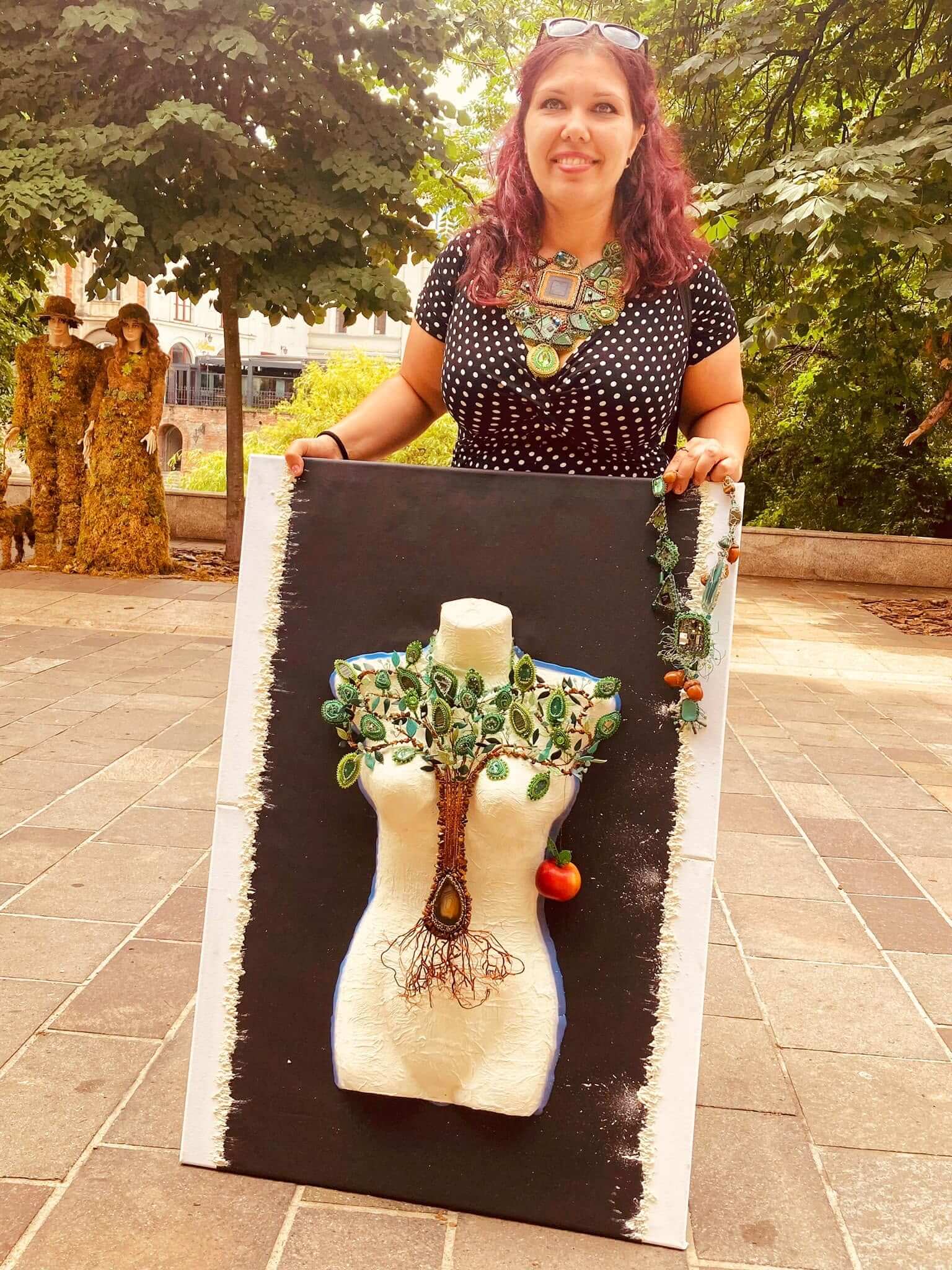
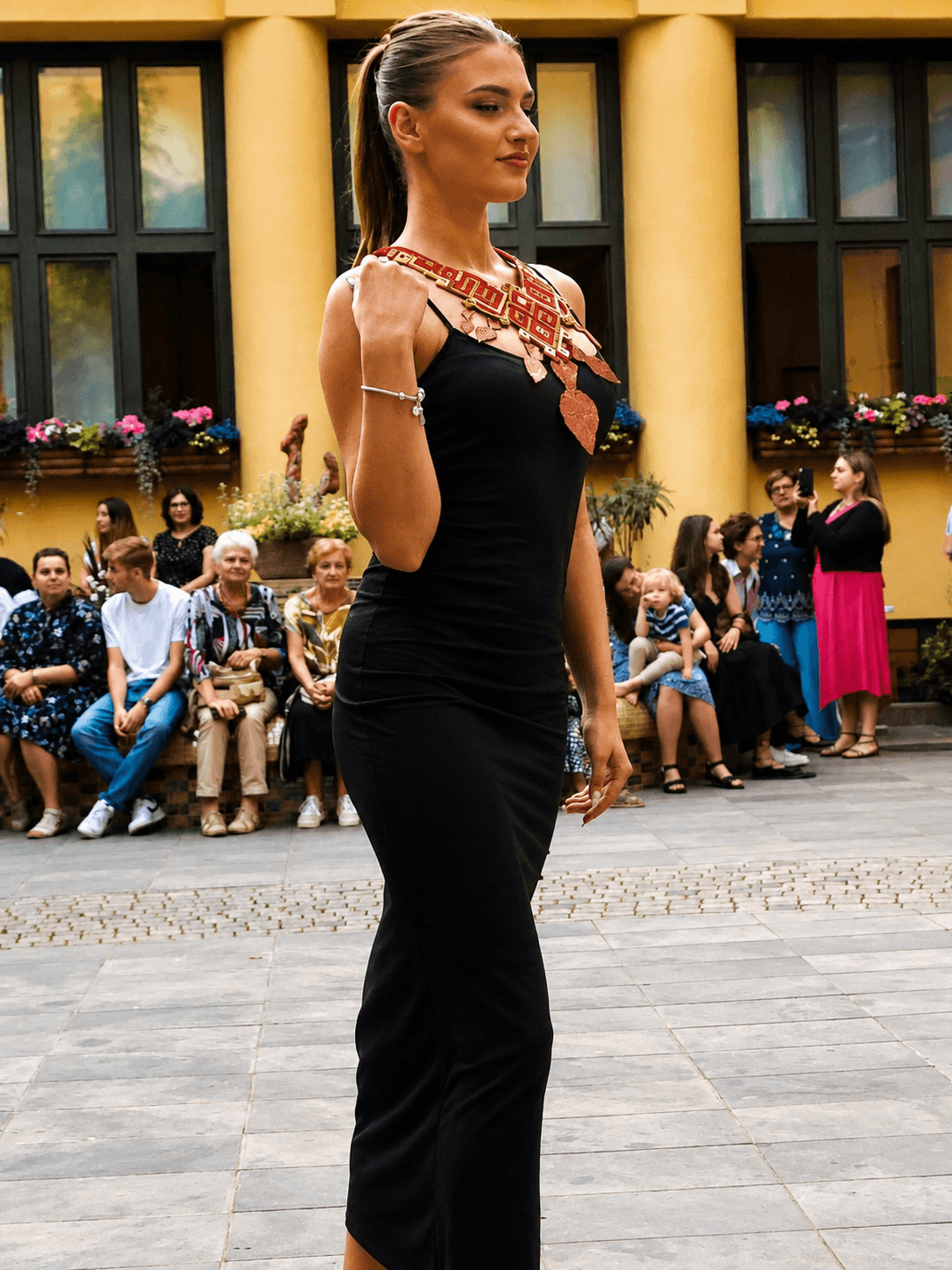
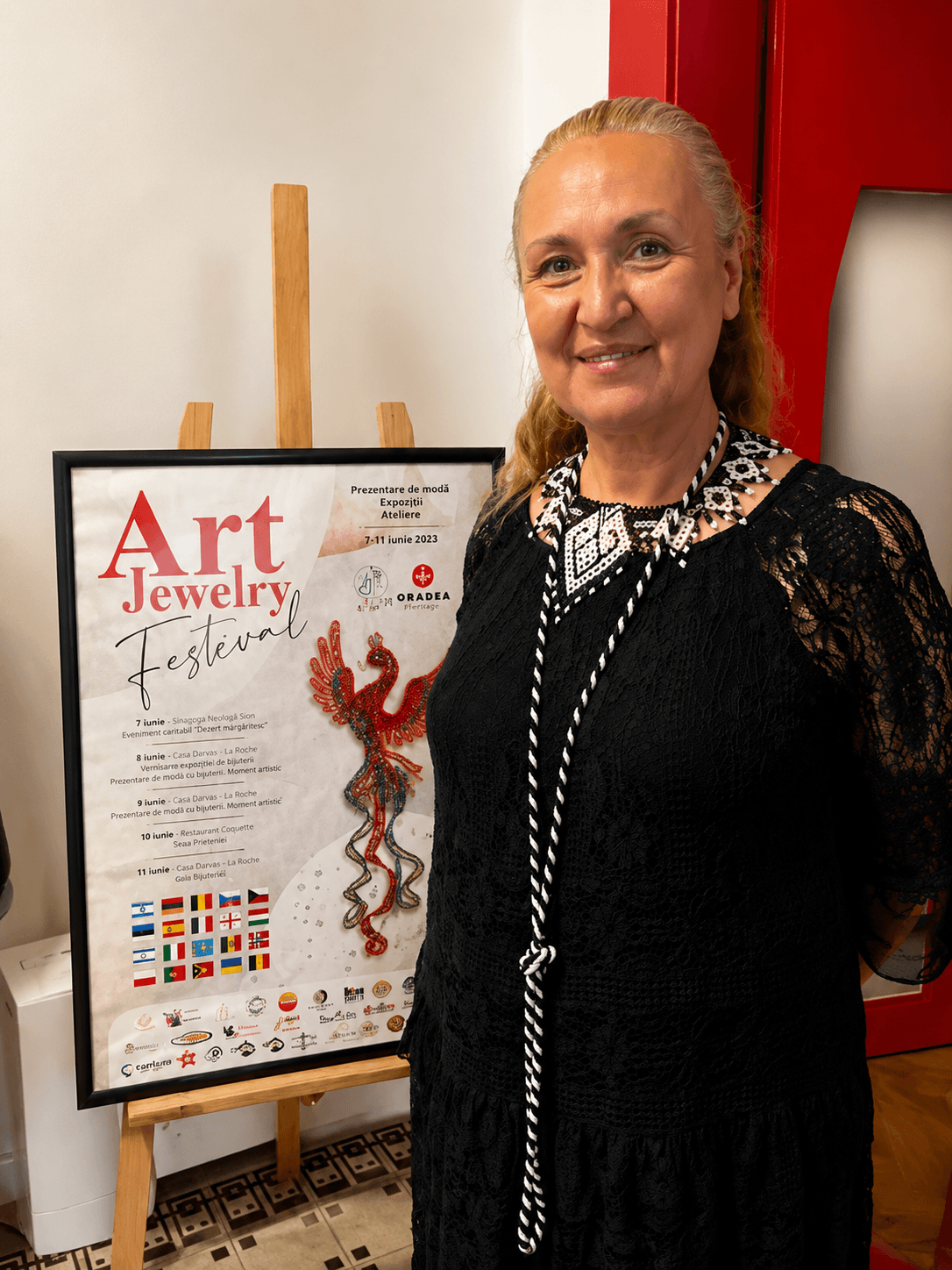
ROMANIAN ARTISANS
Across Europe, individual destinations have successfully associated themselves with particular forms of craftsmanship → Italy has powerful ceramic traditions. The Czech Republic is internationally associated with glass. France has preserved celebrated specialist craft traditions.
Different regions of Europe have built cultural tourism products around → textiles, wool, wood, metal, pottery, jewellery and food. Romania possesses all of these. But its potential advantage is broader than a single material.
Romania — The Land of Living Artisans → Romania still contains an extraordinary landscape of living craftsmanship distributed across villages, mountain communities, historical regions and family traditions.
Pottery → Wood carving, Weaving, Embroidery, Traditional clothing, Wool, Leather, Painted eggs, Icon painting, Jewelry, Metalwork, Stone & Traditional food. Objects whose value cannot be understood only by looking at them. Their real value resides in the combination of material + technique + human knowledge + place + story.
This creates the possibility of a much larger international cultural proposition → The ambition is not to turn Romanian artisans into tourist attractions. It is precisely the opposite. The objective is to make the visitor understand why the artisan matters. The experience can be organized around → SIX-STAGE CULTURAL JOURNEY ↓
The DMC
Concept
SEE IT
The journey begins with context. Before touching the material, the traveler needs to understand what they are looking at. A traditional object without its story can easily become decoration. The same object, placed within its historical and cultural context, becomes evidence of continuity. This first stage can therefore begin in a museum, archaeological site, traditional household, historical building, village, church, local collection or directly inside the artisan’s workshop.
The guide introduces the geography. The historical period. The community. The symbols. The material. The function of the object. The visitor first learns to see. Not merely to look. A spiral painted on pottery is no longer simply ornament. A geometric pattern woven into a textile is no longer simply decoration. A piece of wood is no longer simply raw material. A stone taken from a river is no longer simply a stone. Every object can become the entrance to a much larger story.
MEET THE ARTISAN
Then the relationship changes. The visitor meets the person. This is the point at which heritage stops being abstract. The artisan has a name. A face. A workshop. Tools. A family. A technique. Perhaps a grandmother or grandfather from whom the craft was learned. Perhaps decades of practice. Perhaps a material collected locally. Perhaps a symbol whose meaning has been preserved inside the community. Instead of the guide speaking about Romanian craftsmanship, the traveler meets the person actually practicing it. The artisan becomes the cultural host. The workshop becomes the cultural space. This encounter should not be organized as a theatrical performance manufactured for tourists.
Its strength lies precisely in its authenticity. A King Travel group can enter an existing working environment and discover how the artisan actually works. What tools are used? Where do the materials come from? How long does an object take to make? What mistakes can destroy it? Which techniques are difficult to preserve? Who taught the artisan? Who will learn the craft next? What does a particular symbol mean? What has changed during the artisan’s lifetime? Suddenly the visitor is no longer consuming information. There is a human conversation.
LEARN IT
The third stage converts observation into knowledge. The artisan demonstrates one technique that can safely and realistically be taught to visitors. The objective is not to transform a tourist into a master craftsman in two hours. It is to allow the visitor to understand the intelligence contained inside the craft. Watching an experienced artisan perform a movement can make it appear simple. Trying it immediately reveals the opposite. The pressure of the hand matters. The angle matters. The material matters. Timing matters. Repetition matters. Experience matters. This moment produces respect. The tourist understands that the finished object seen in a shop represents not only material value but accumulated human knowledge. The workshop therefore becomes a small school of living heritage.
MAKE IT
Then comes the decisive moment. The visitor makes something. Not a simulated digital object. Not a mass-produced souvenir personalized at the end. Something physical. Depending on the artisan and region, this might be: a small ceramic form; a painted motif; a woven element; a simple piece of jewellery; a carved wooden symbol; an embroidered fragment; a decorated object; a small item created from local natural materials or another object specifically designed by the artisan for a two- or three-hour visitor workshop. The format must be adapted to the real craft. Some traditional techniques require years of training and cannot responsibly be compressed into a tourist activity.
In those situations the artisan performs the complex stages while the visitor participates in one authentic, safe and teachable component. The principle remains:The visitor’s hands must enter the story. This changes memory. A photograph records what someone saw. An object created with one’s own hands records what someone did.
BUY IT
The experience does not eliminate commerce. It makes commerce meaningful. At the end of the workshop, visitors should have the possibility to purchase authentic works directly from the artisan. This matters economically.Instead of cultural tourism concentrating expenditure almost exclusively in transportation, accommodation, restaurants and admission tickets, part of the tourism economy reaches the people who preserve the cultural knowledge that attracted the visitor in the first place.
The transaction is also completely different psychologically. The traveler is no longer asking: “How much does this souvenir cost?” The traveler has watched the object being made. They know the material. They understand the skill involved. They have met the artisan and tried the technique themselves. What they buy is no longer simply a product; its value comes from the craftsmanship behind it. This allows direct sales to become a natural part of the experience without turning the workshop into a souvenir shop. The artisan retains authorship, the visitor knows where the object came from, and more of its value stays within the local community.
TAKE THE STORY HOME
This is the final stage → and perhaps the most important. The traveler leaves Romania. But Romania does not completely leave the traveler. The object travels. To London, Paris, Berlin, New York, Tokyo, Shanghai, Sydney, Toronto, Singapore. It enters a home. Someone sees it. Someone asks: “Where did you get that?” And the tourist does not answer: “I bought it in Romania.” The answer becomes: “I met the person who made it.”
Then comes the story → The village. The mountains. The workshop. The family. The symbols. The technique. The material. The attempt to make one. The mistakes. The meal afterward. The journey.
Romania acquires another storyteller abroad → This is where tourism becomes something larger than tourism. The traveler becomes the distribution channel for cultural memory ↓
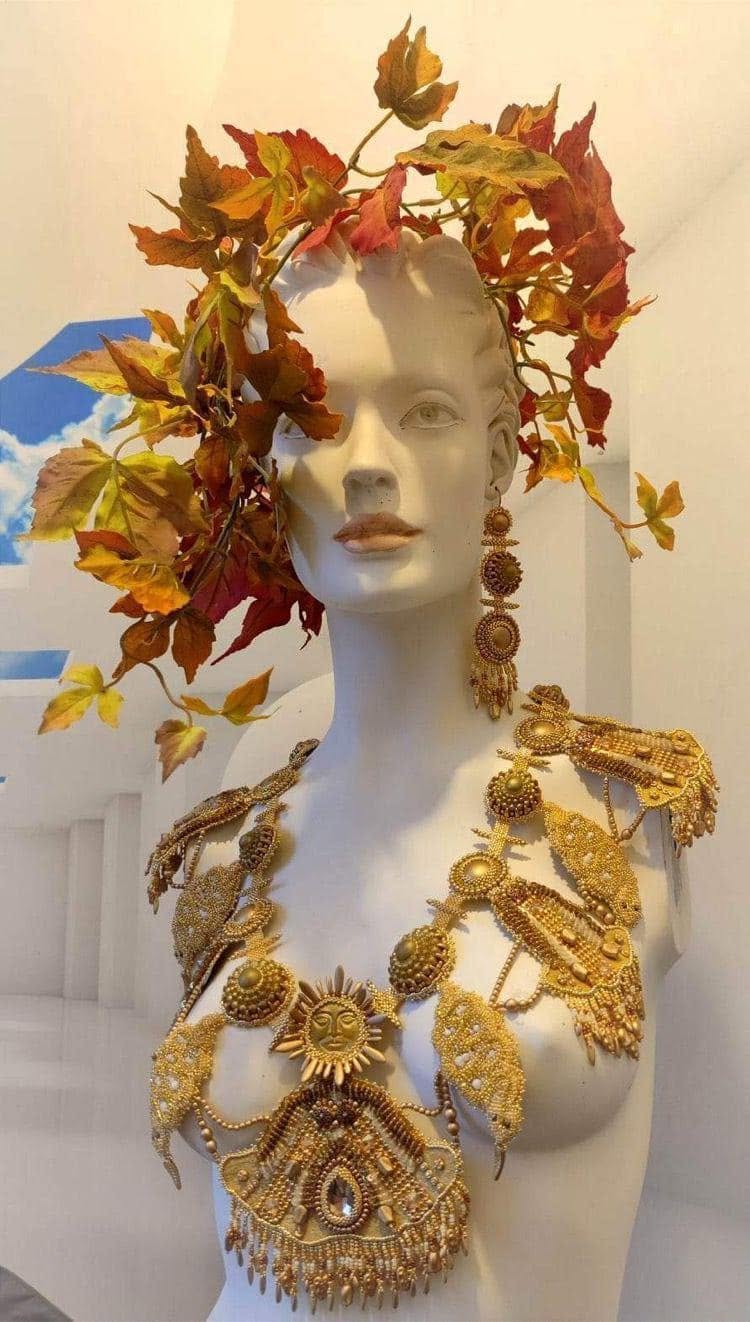
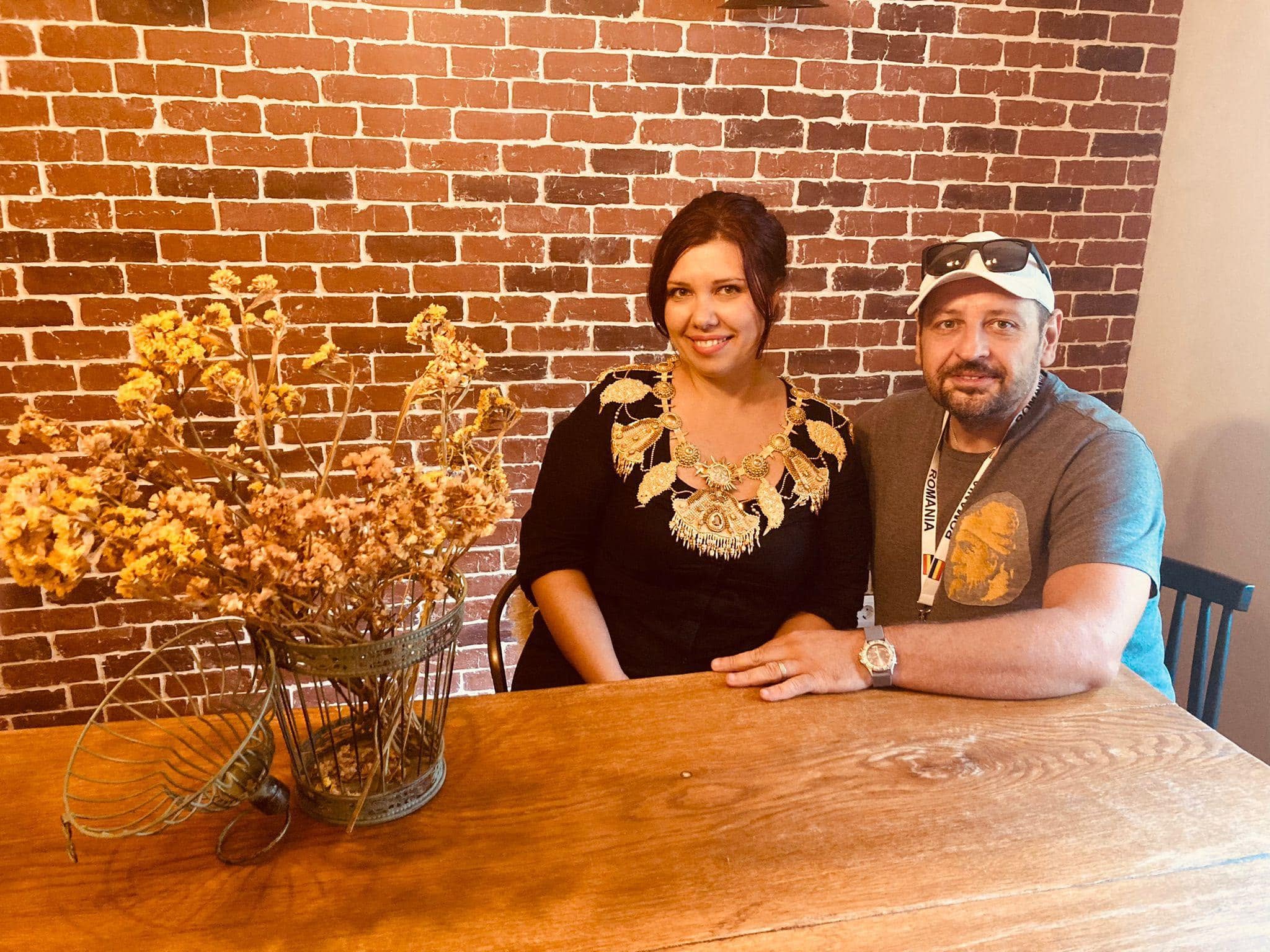
EUROPEX™
THE EXPERIENCE DID
NOT BEGIN TODAY ↓
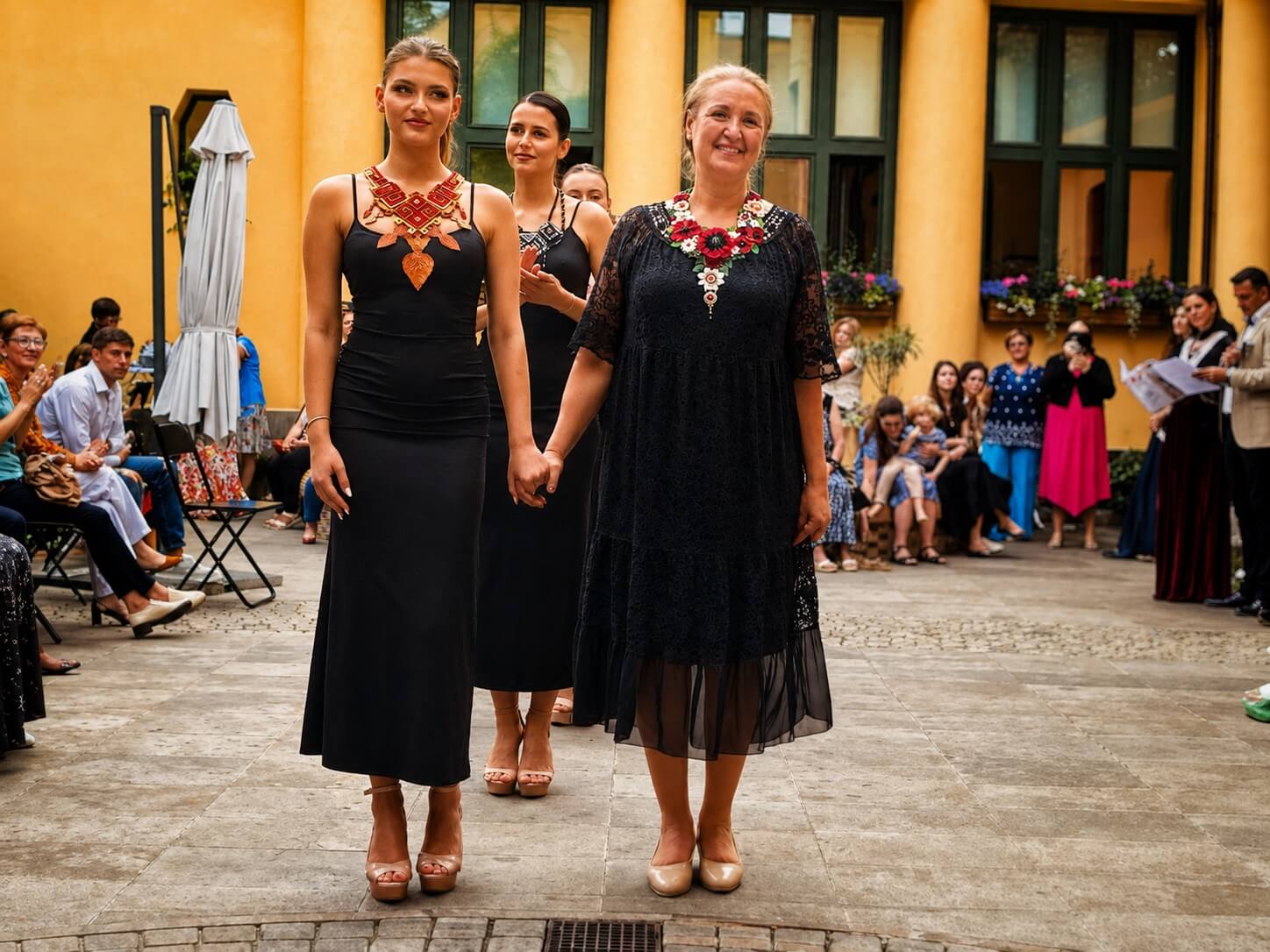
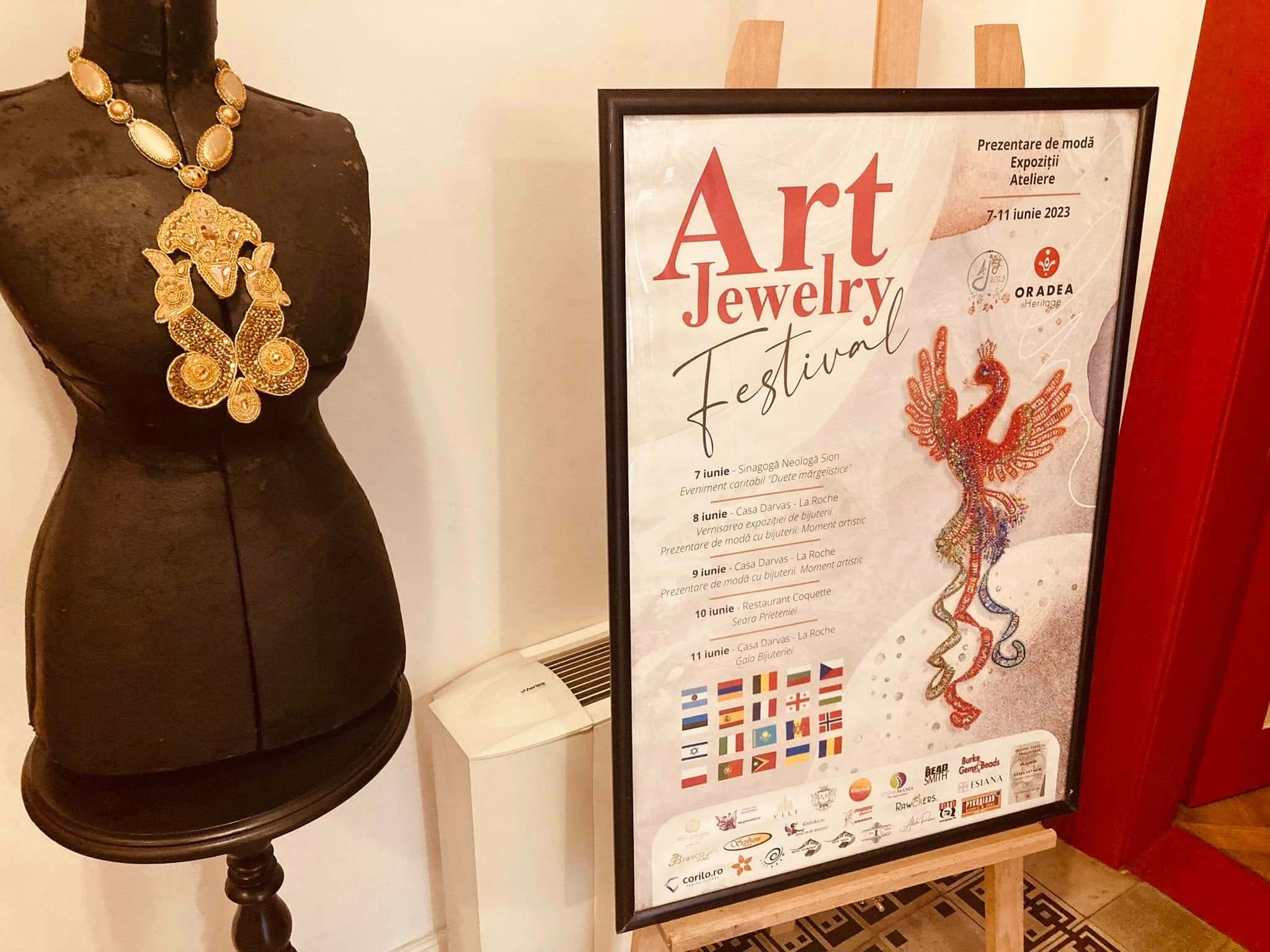
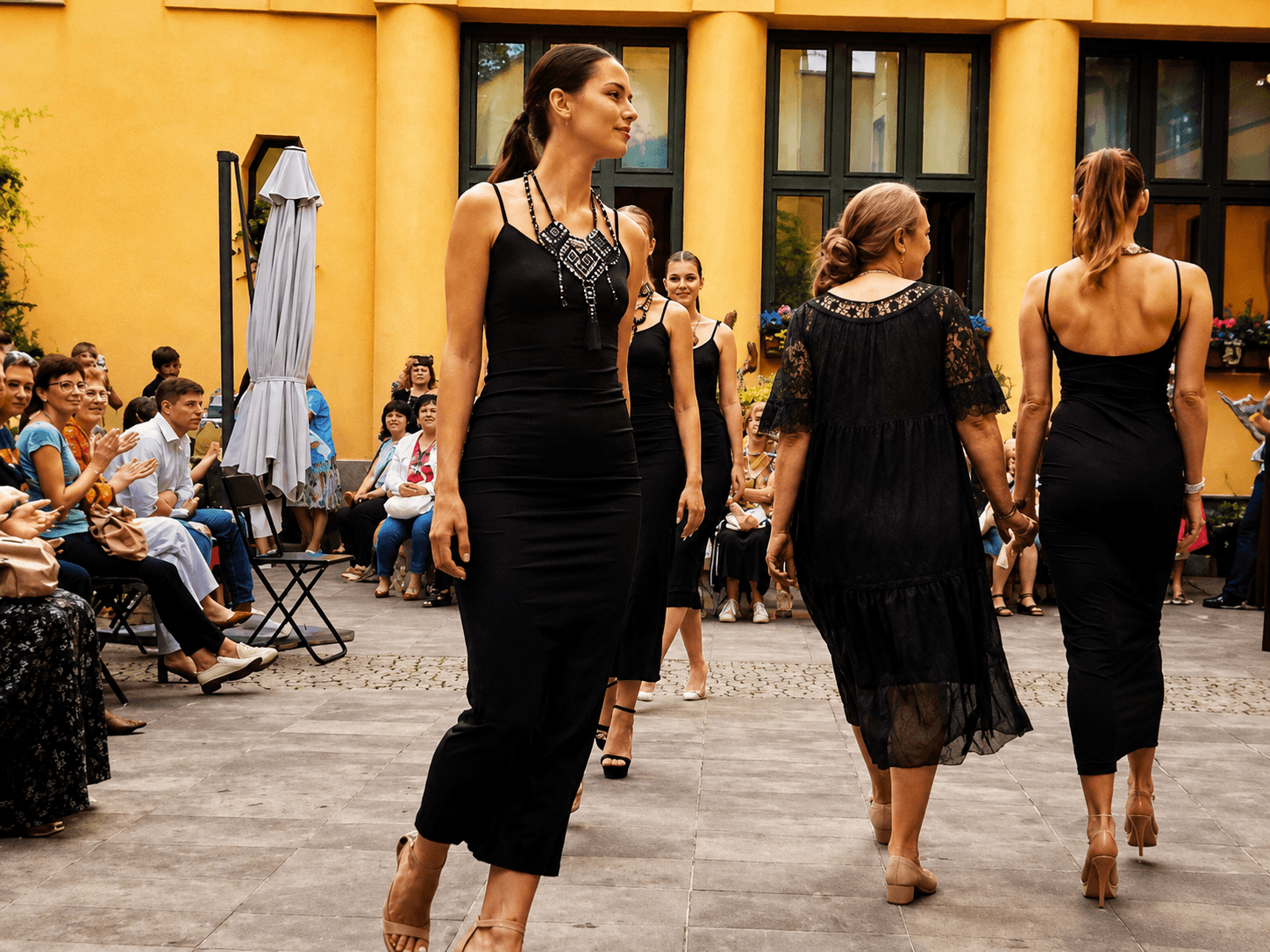
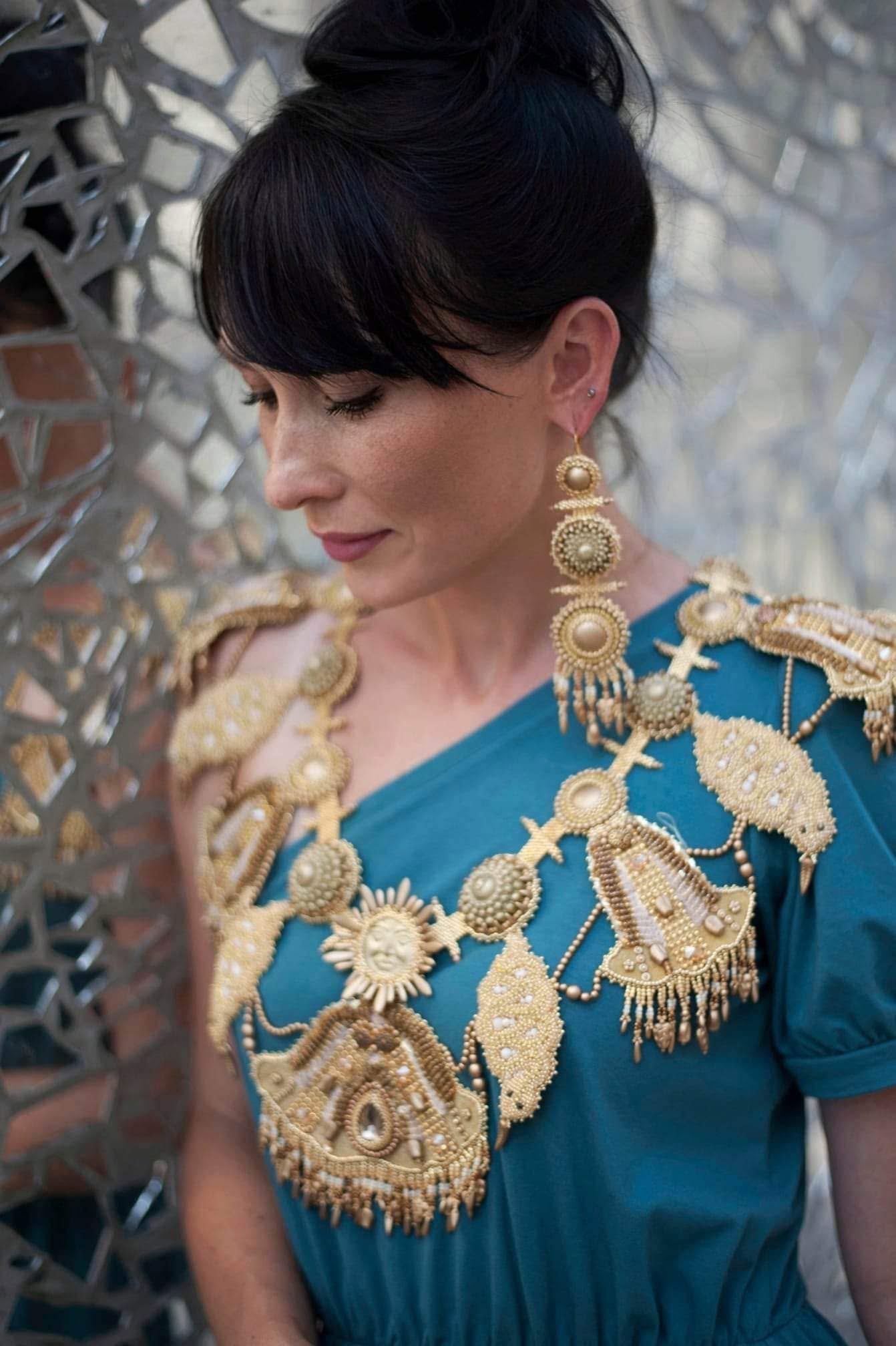
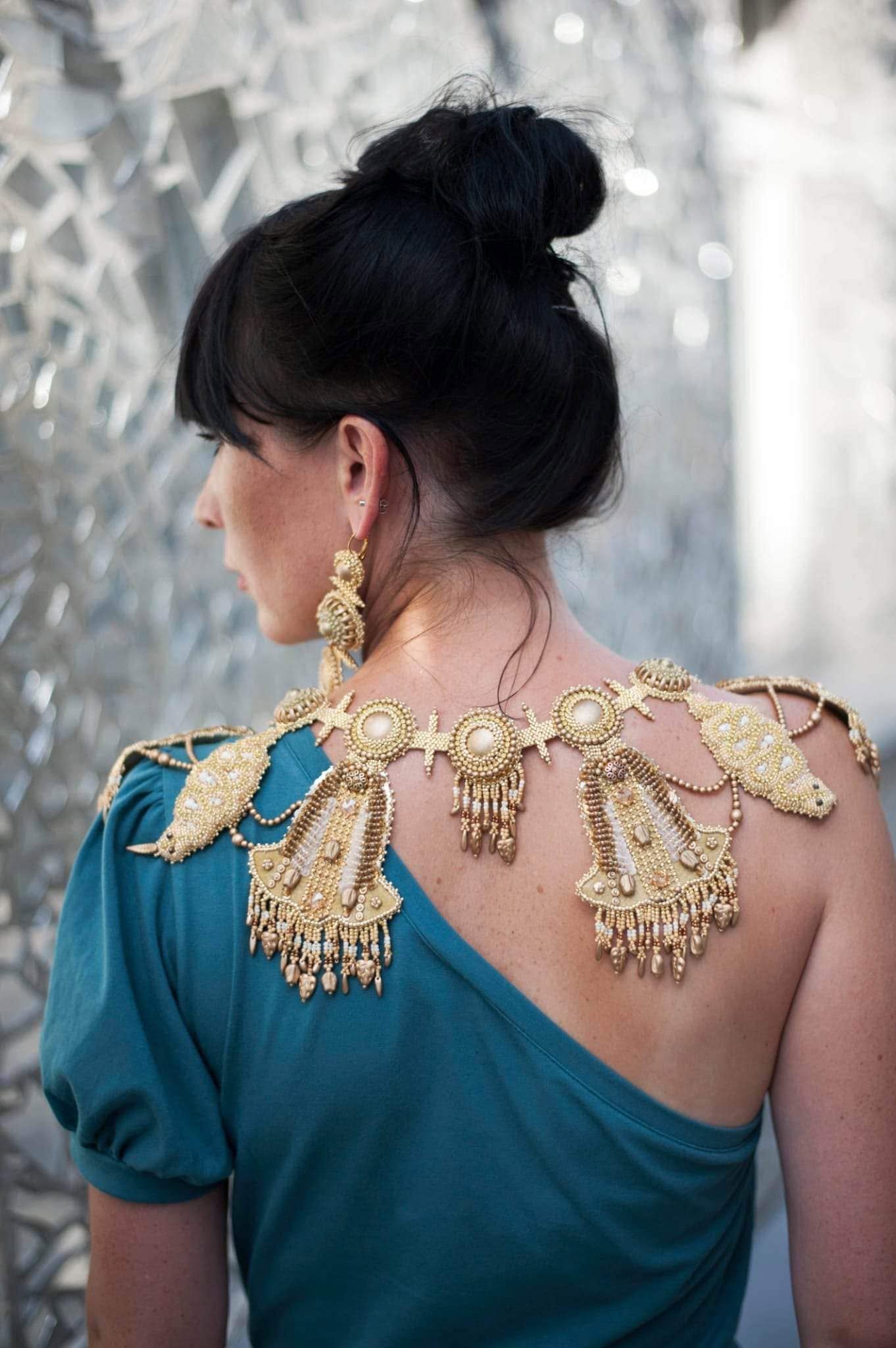
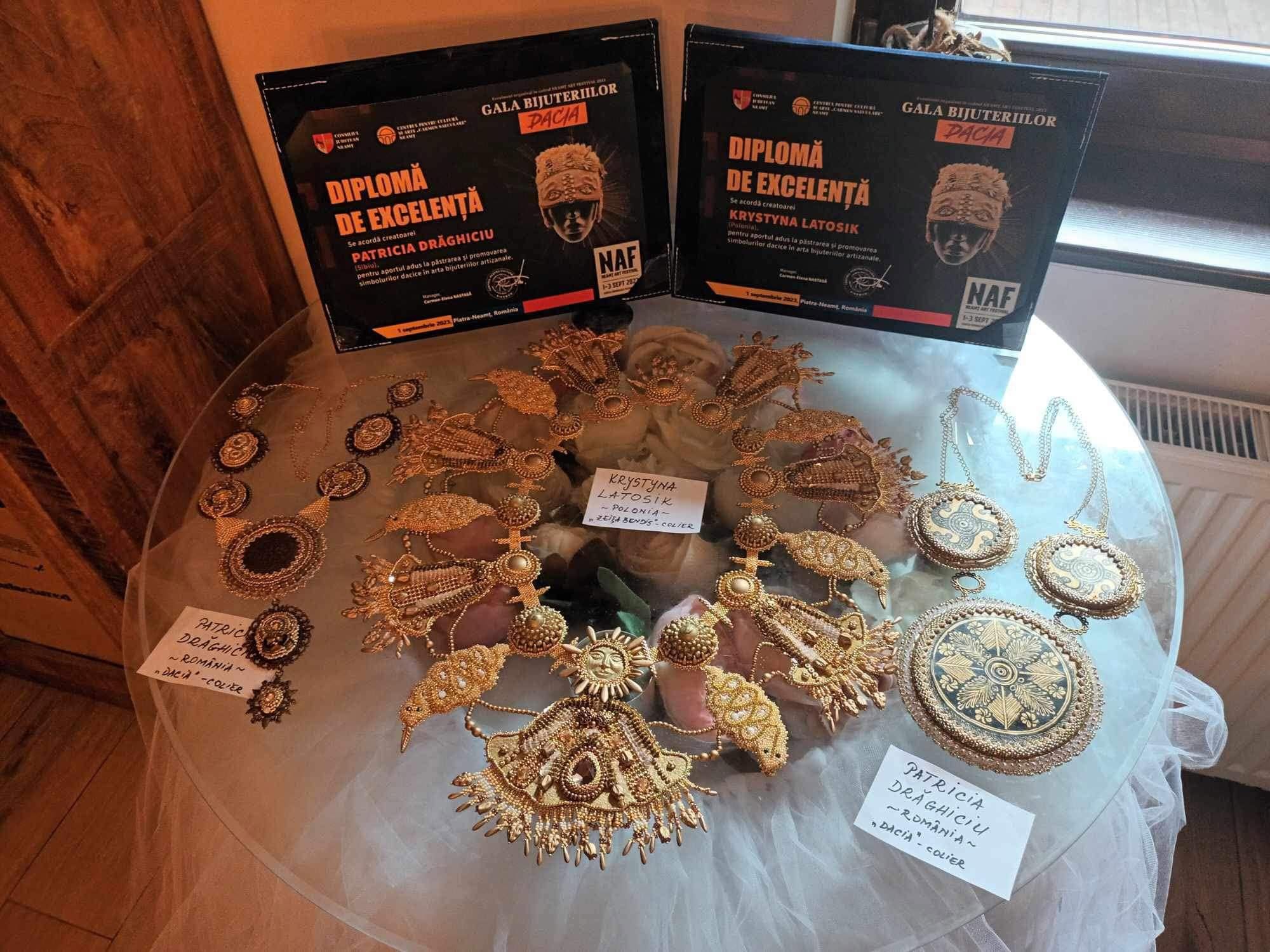
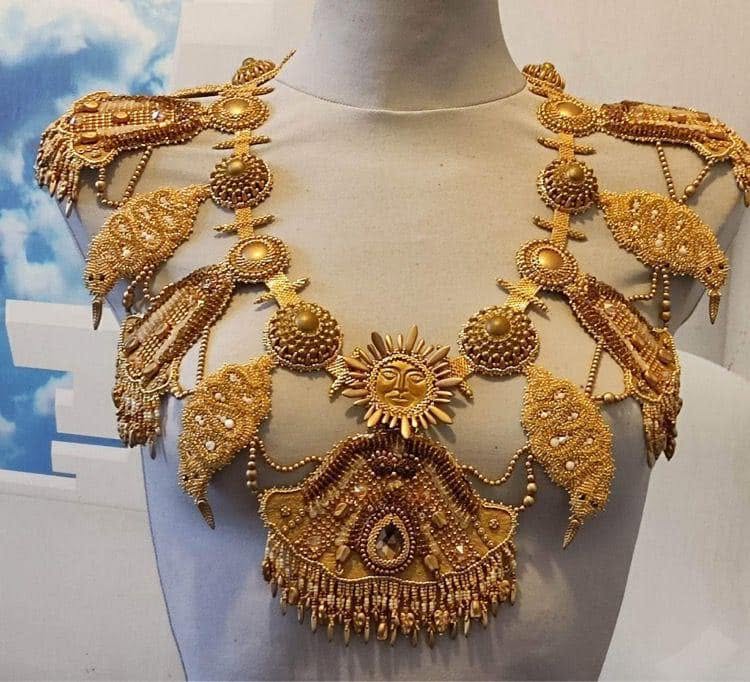
The concept has an important Romanian precedent, long before the proposed King Travel format, Genesys → EuropeX™ were already experimenting with ways to connect Romanian cultural narratives with contemporary creators, jewellery, events and international audiences. A particularly relevant example came from the 2023 jewellery and cultural-art events. EuropeX™ documented the Battle of the Beadsmith 2023, while the wider project brought together artists, local stories and the Jiu Valley through events in Oradea and Piatra Neamț.
One of those artists was Polish jewellery creator Krystina Latosik → After winning a competition connected to the Art Jewellery Festival in Oradea, she received a one-week stay in the Jiu Valley, coordinated with her participation in the Neamț Art Festival. For her creation, she worked with BENDIS, the Geto-Dacian goddess, as the central theme.
A Polish contemporary jewellery artist encountered a Romanian cultural story → and interpreted it through her own craft. The result was a physical object that carried that story beyond the place where she had discovered it and was subsequently connected back to the Jiu Valley. This was not conventional destination advertising → The story travelled through the artist, the artist gave it physical form, and the object carried it to a new audience. That same principle can now become part of the cultural tourism experience.
RHABON — WHEN A STONE BECOMES A STORY
Another documented example shows how far this idea can go. Romanian artisan Laura Bogdan Hancăș created a piece of jewellery using natural stones collected from the landscape of the region: from the East Jiu, the Parâng Mountains, the Peștera Bolii area and the Strei. In their original setting, these stones are simply part of the landscape. In the hands of an artisan, they become something else. They were incorporated into a jewellery piece inspired by RHABON, the ancient name associated with the Jiu, connecting the physical geography of the region with its cultural narrative. The transformation can be understood as a simple chain.
FROM SOUVENIR TO PROVENANCE ↓
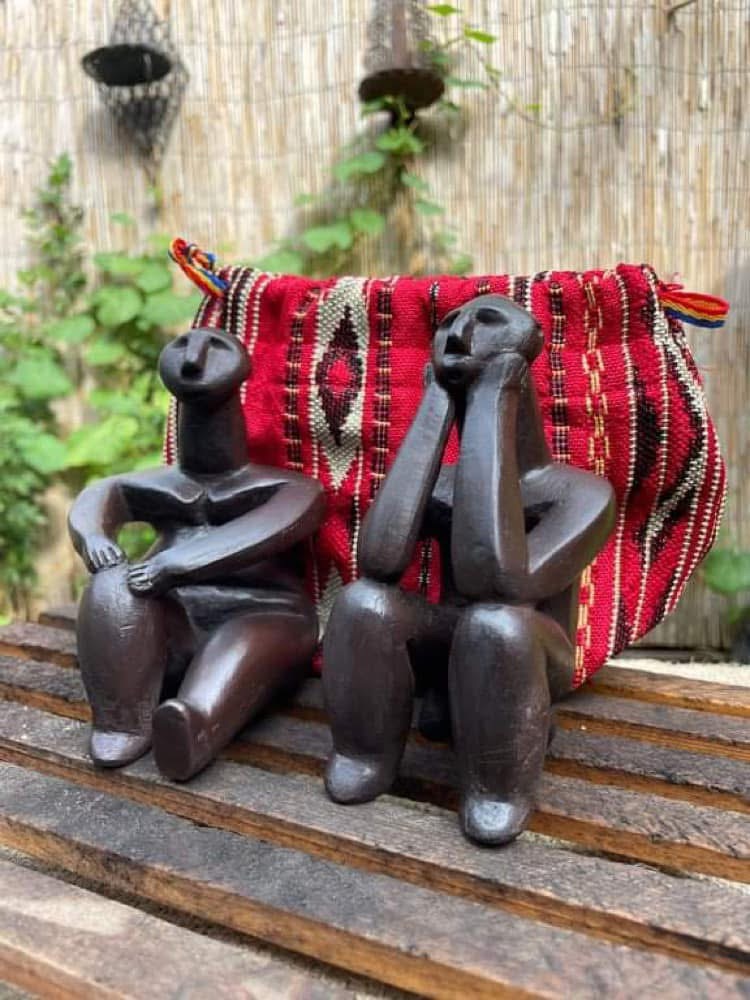
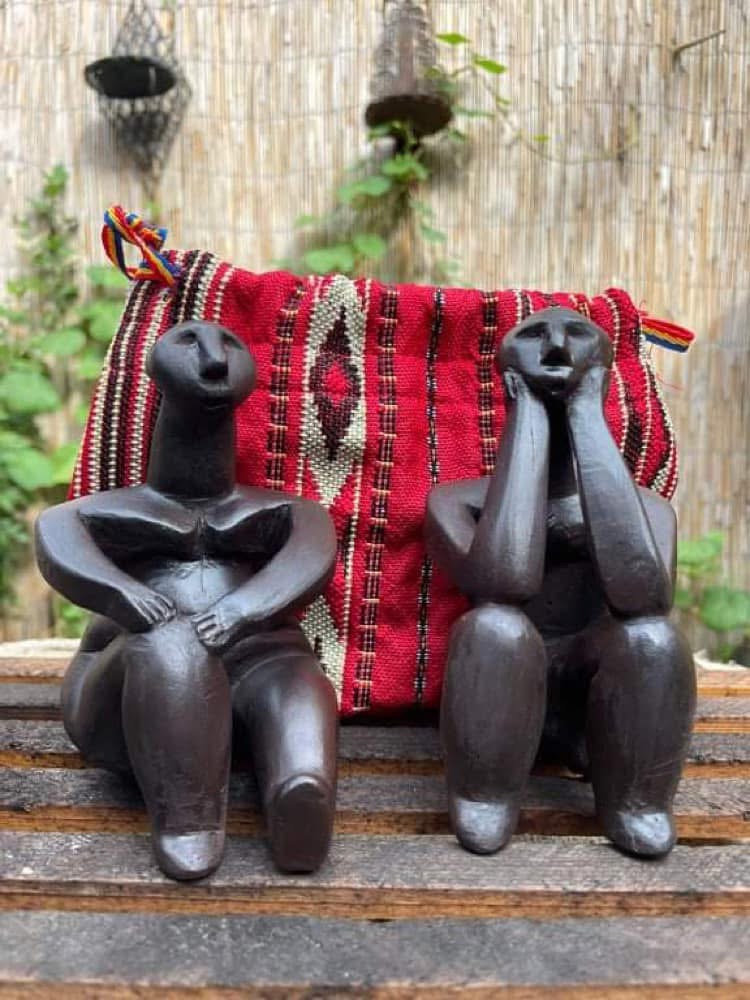
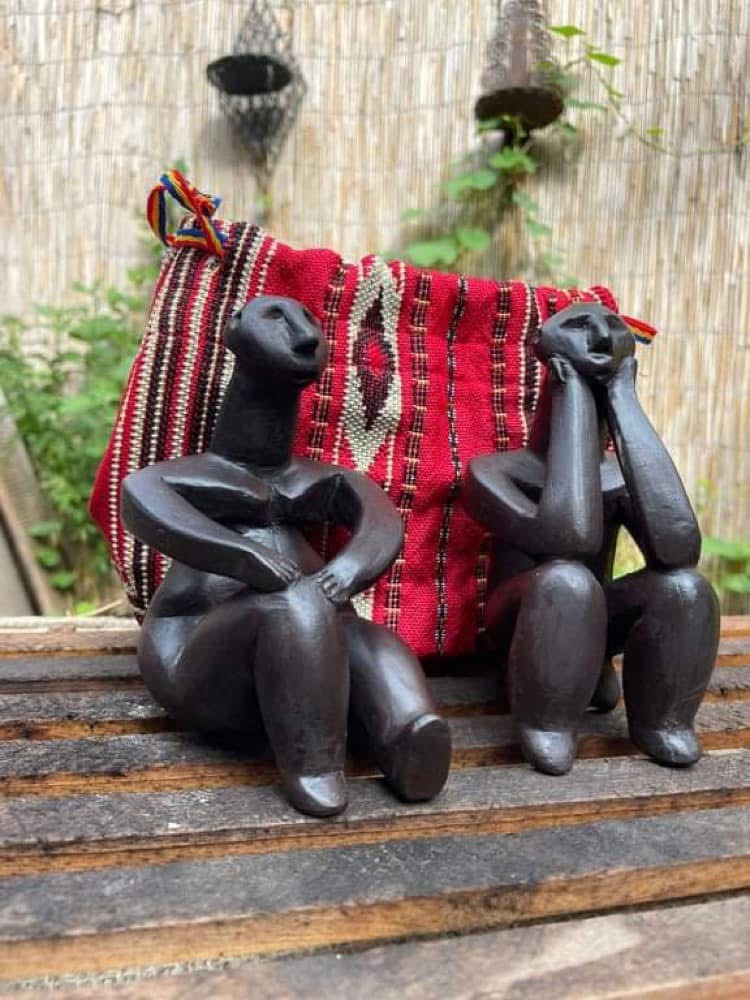
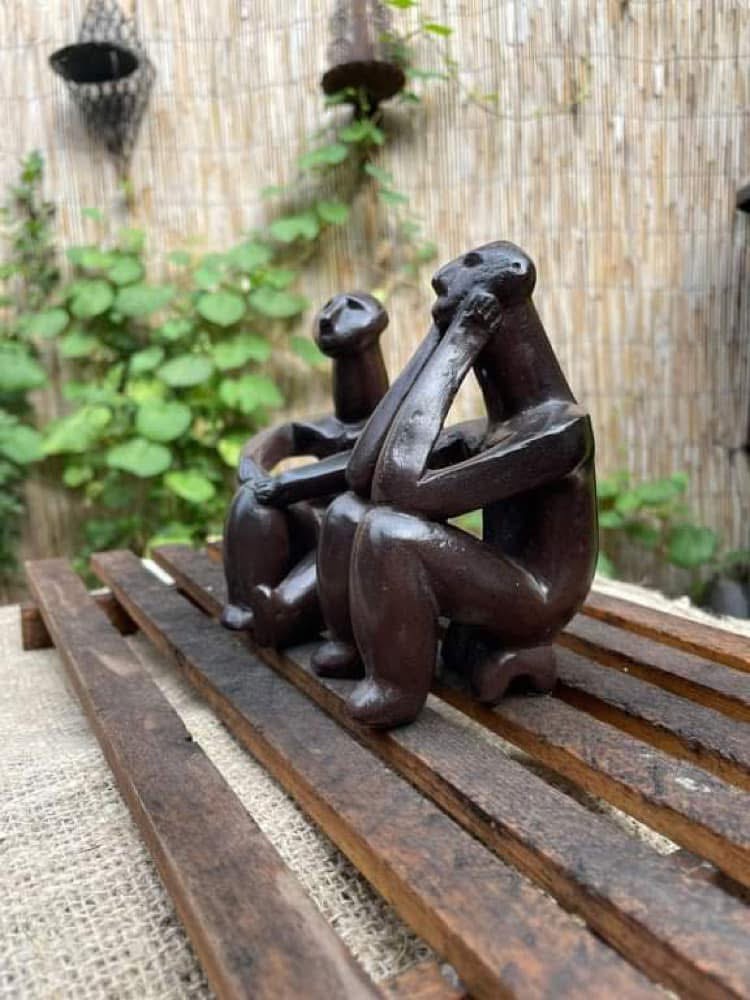
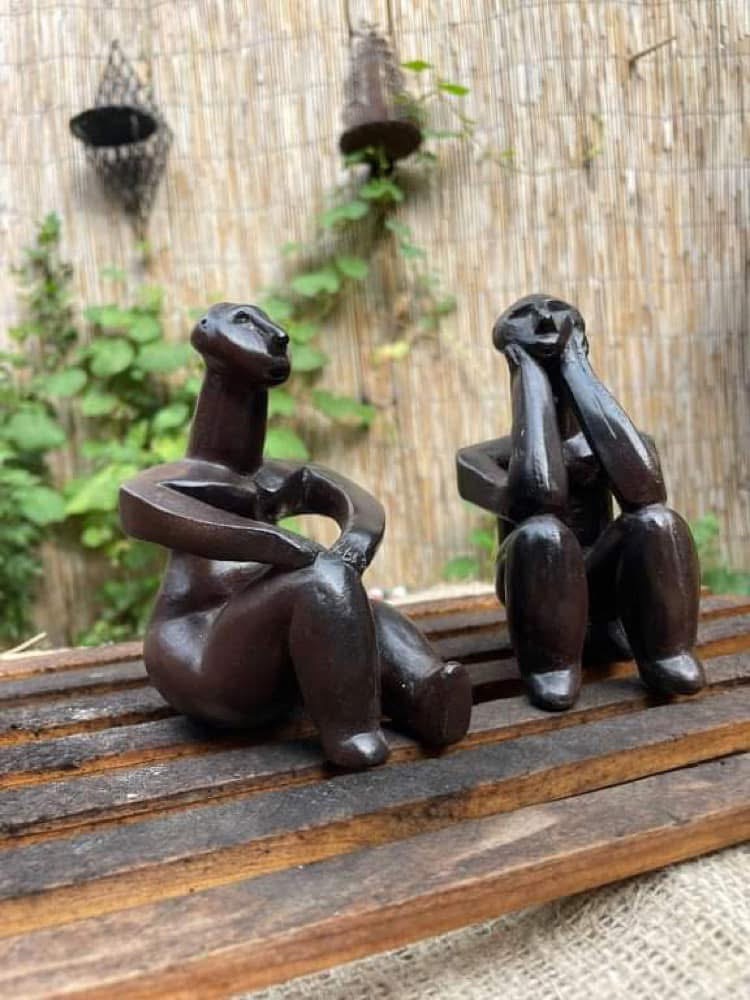
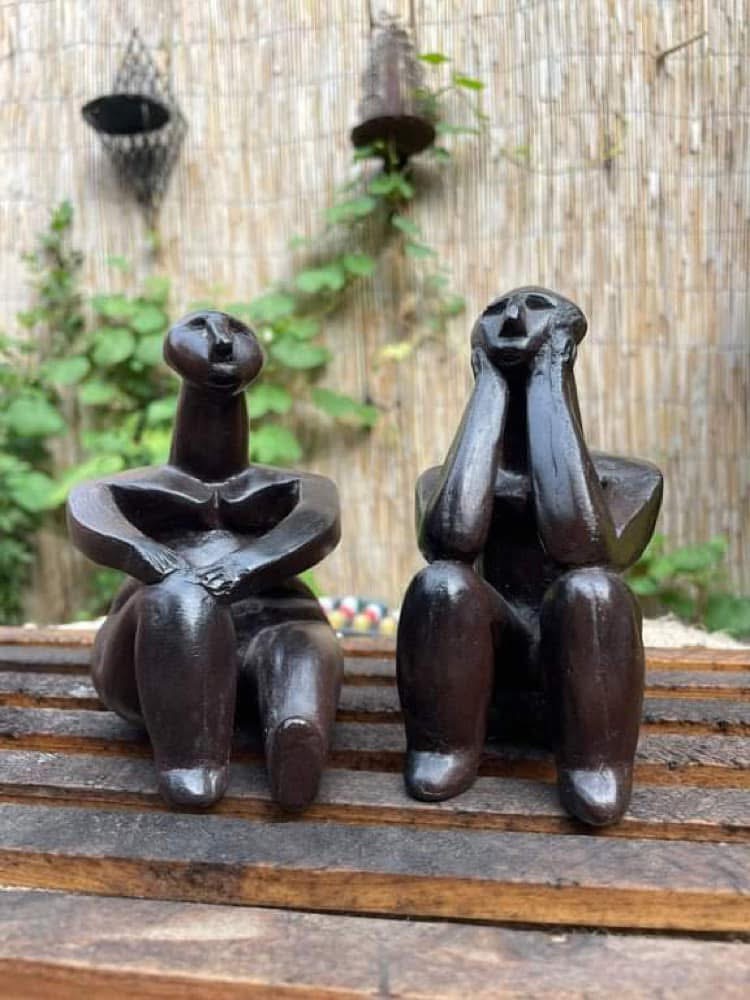
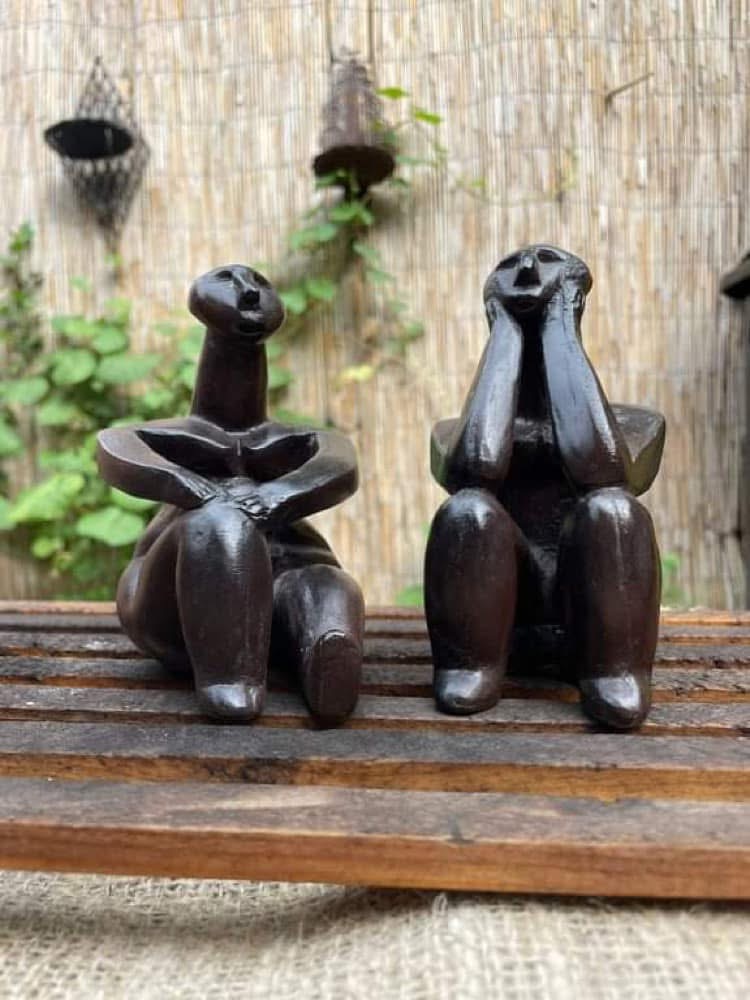
The Thinker of Old EUROPE → HAMANGIA
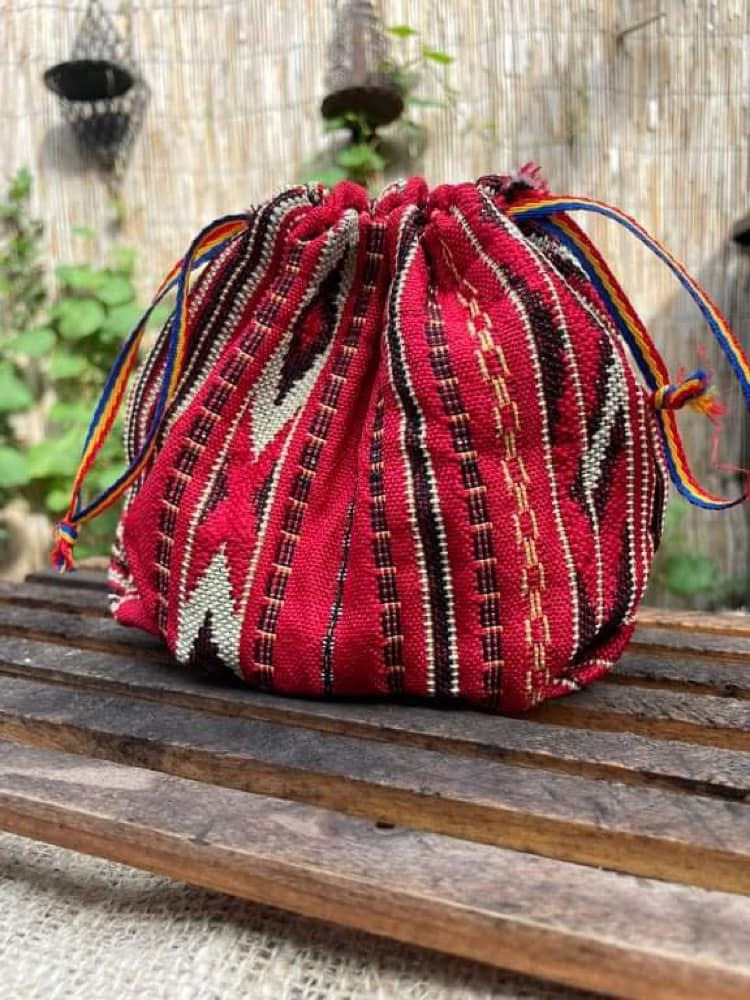
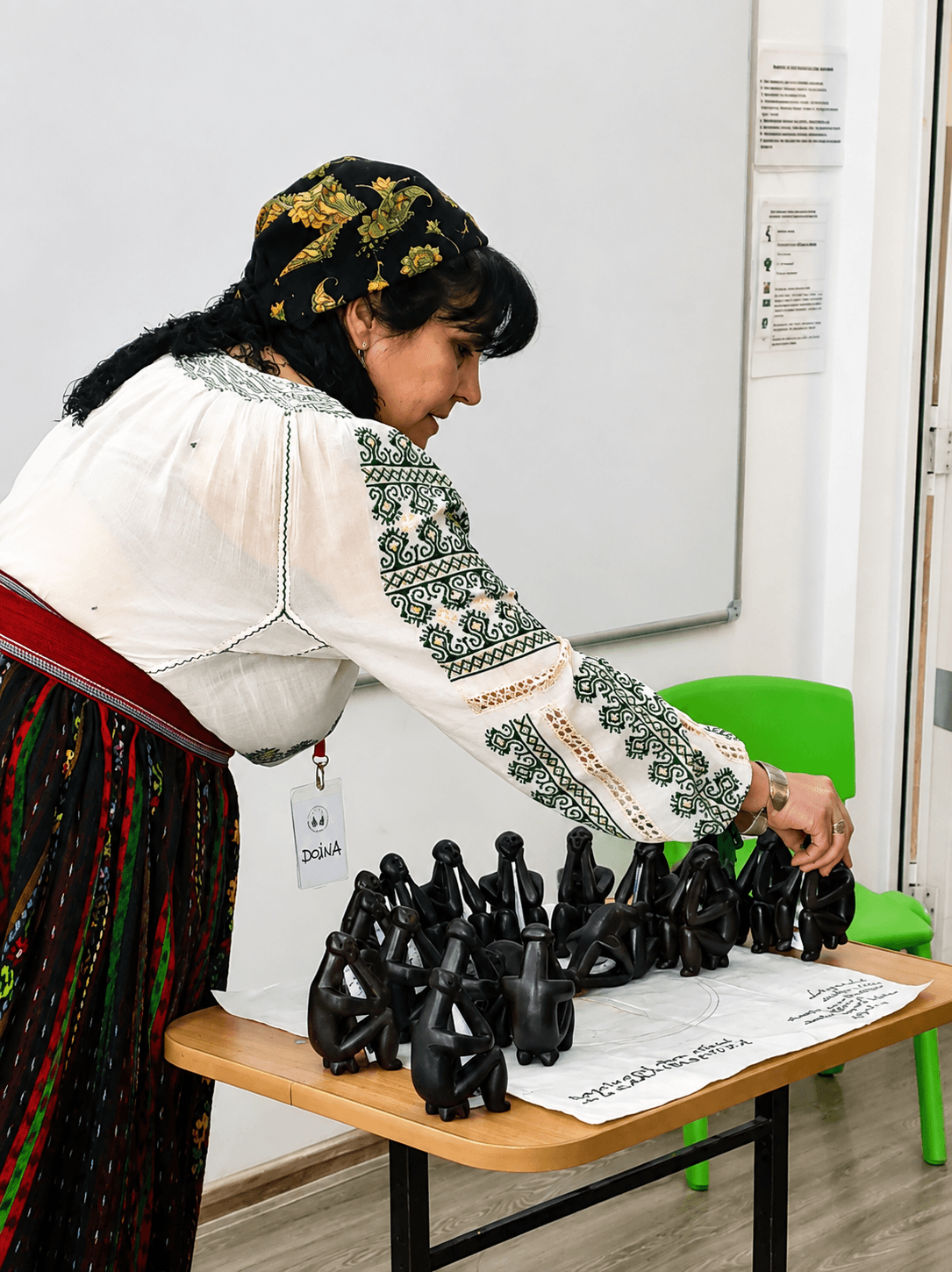
Every object included in the program can carry its own simple record of origin. A small card can accompany each piece: Made in Romania, Made by: Susman Dorina Carmen, Place: Cernavodă / historical region HAMANGIA, Craft: sculpture, Material: clay, Story: The Thinker of HAMANGIA – 5000 B.C. A QR code can lead to a dedicated English-language page where the visitor can discover more about the artisan, the craft and the tradition behind the object. With the artisan’s consent, the page can include photographs, a short interview, footage from the workshop and information about the piece itself. The traveler no longer leaves with an anonymous souvenir. They leave knowing who made it, where it came from, how it was made and what story it carries. The physical object becomes a gateway to a living digital cultural archive.
PLACE
↓
STORY
↓
ARTISAN KNOWLEDGE
↓
DESIGN
↓
HANDWORK
↓
PROVENANCE
↓
OBJECT
↓
CULTURAL VALUE ↓
The stone itself has little commercial value. Its value emerges through the layers added to it: where it was found, the story attached to that place, the artisan’s knowledge, the design, the work of the hand and the provenance that keeps all of these elements connected. A fragment of landscape becomes a physical carrier of place identity. This is exactly what a King Travel artisan experience can make tangible for an international visitor. There is no need to explain craftsmanship as an abstract idea. The traveler can see how material becomes an object, understand where its value comes from, meet the person who creates that value and then take part in the process themselves.
FROM CULTURAL EVENT
TO TOURISM PRODUCT ↓
The earlier Genesys / EuropeX experiments demonstrated another important principle → Cultural experiences become stronger when the people, places and stories around them are brought together. Artist. Artisan. Accommodation. Local food. Guide. Event. Destination. International visitor. The January 2024 program in the Jiu Valley, for example, brought King Travel and cultural partners together around ancestral music, pan flute, traditional performers and a wider regional experience. King Travel already applies a similar approach to its current cultural products. Its Brâncuși DMC Journey does not treat the Endless Column as an isolated monument.
The itinerary connects Petroșani and the industrial story behind the Column → with Aninoasa traditional archery, the Jiu Gorge, Hobița and Târgu Jiu. Each stop adds another layer to the same journey. The artisan experience can follow the same principle. Do not sell the workshop alone. Build the journey around it.
From HAMANGIA ↓
to Brâncuși Experience
HOW A DEDICATED ARTISAN WORKSHOP ↓
CAN BE ORGANIZED FOR TOURIST GROUPS
The format should be designed specifically for inbound groups and DMC partners → A practical workshop can accommodate approximately 8–20 guests per artisan, depending on the craft, available space and safety requirements. Larger groups can be divided between several artisans or rotated through complementary experiences. A complete experience can take approximately 2.5–4 hours.
STAGE 1 — ARRIVAL AND CULTURAL CONTEXT
15–30 minutes → The King Travel cultural guide welcomes the group and introduces the place: the region, the community, its history, the craft, the materials and symbols, and the role the tradition has played in local life. This is not an academic lecture. It is an introduction to the story. By the time visitors meet the artisan, they already understand why the craft matters and why the person they are about to meet is part of something larger.
STAGE 2 — MEET THE ARTISAN
20–30 minutes → The artisan welcomes the group into the workshop. Tools and materials are introduced, finished pieces are displayed, and the conversation moves naturally toward the artisan’s own story. How did they learn the craft? How long have they practiced it? Where do the materials come from? What takes years to master? How can authentic work be distinguished from imitation? Which traditions are at risk of disappearing and what deserves to be carried forward? Where necessary, the King Travel guide provides translation and context. The artisan does not have to become a professional English-speaking tour guide. The tourism infrastructure surrounds the artisan. The artisan remains the artisan.
STAGE 3 — MASTER DEMONSTRATION
20–30 minutes → Before trying anything themselves, visitors watch an experienced hand at work. Whenever the craft allows it, the demonstration follows the transformation from beginning to end: RAW MATERIAL → PREPARATION → TECHNIQUE → TRANSFORMATION → FINISHING. This is where visitors begin to see the difference between the material itself and the knowledge required to transform it. Photography and filming can be encouraged according to the artisan’s preference.
STAGE 4 — LEARN
20–30 minutes → The artisan introduces the part of the process that visitors will perform themselves. Each participant receives the appropriate materials and tools, with safety instructions where required. The activity should meet four simple criteria: AUTHENTIC → TEACHABLE → SAFE → COMPLETABLE. Most importantly, visitors should perform a genuine part of the craft. It should not become a generic tourist activity that happens to take place inside an artisan’s workshop.
STAGE 5 — MAKE
45–90 minutes → This is the heart of the experience. Guests begin working. The artisan moves between them, demonstrating, correcting and helping. Hands get dirty. Mistakes happen. Questions come naturally. People laugh. The visitor who arrived as an observer becomes a participant. This is also where photography gains a different value. Instead of another group photograph in front of a monument, King Travel can document travelers making something with their own hands, alongside the person who taught them how. Those photographs become part of the story they take home.
STAGE 6 — THE ARTISAN TABLE
From the workshop, the experience can move naturally into hospitality. Depending on the place and the program, this might include local food, coffee or tea, traditional drinks, regional products, a small tasting or a complete meal. There is no need to bring every Romanian tradition into the same experience. The food belongs to the place. The craft belongs to the place. The artisan belongs to the place. The coherence comes from geography.
STAGE 7 — BUY DIRECTLY FROM THE ARTISAN
A carefully selected collection of the artisan’s work can be available after the workshop, without obligation to purchase and without turning the space into a souvenir shop.
By this point, visitors understand what they are looking at. They know the materials, they have seen the technique, they have tried it themselves and they know the person who made the object. Every purchased piece can be accompanied by its artisan provenance card. For objects that are difficult to carry home — larger ceramics, textiles, artworks or fragile pieces — international delivery can be arranged separately where the artisan and available logistics allow it.
STAGE 8 — TAKE THE STORY HOME
Before departure, each participant receives a digital link to the story behind the experience. It can bring together the artisan, the craft, the location, its cultural context, the meaning of particular symbols, photographs from the workshop and the wider King Travel journey. The object and the digital story remain connected. The traveler may leave Romania. The experience does not have to end there.
Brâncuși the Artisan
ONE MODEL → MANY CULTURAL REGIONS
The same experience architecture can be used across Romania without standardizing the culture itself. King Travel can maintain a consistent journey: SEE → MEET → LEARN → MAKE → BUY → TAKE HOME while each region provides its own crafts, materials, traditions and cultural context. In Moldavia, the experience can develop around Cucuteni-inspired ceramics, pottery, painted eggs, textiles and traditional food; in Maramureș, around wood carving, textiles, traditional gates and domestic craftsmanship; in Bucovina, around painted eggs, religious art, wood and textiles; in Transylvania, around woodwork, ceramics, metal, jewellery and village crafts; and in Oltenia, around Horezu pottery, wood, textiles and vernacular traditions connected to the cultural world from which Brâncuși emerged. The Jiu Valley and Ținutul Momârlanilor offer another combination: wool, wood, stone, traditional clothing, local food, jewellery and contemporary interpretations of the mountain landscape. The RHABON precedent is particularly relevant because it demonstrates how material taken directly from the landscape can acquire cultural and artistic value through craftsmanship.
CUCUTENI — FROM MUSEUM OBJECT TO LIVING EXPERIENCE King Travel already presents Cucuteni as one of the major cultural gateways into Old Europe. This can be extended naturally from archaeological interpretation into a contemporary artisan experience. Visitors first encounter authentic objects in the appropriate museum context, understand their symbols and historical significance, and then meet a contemporary ceramic artisan who can introduce the material, technique and practical knowledge behind working with clay.
The experience can follow a clear sequence: SEE THE ORIGINAL → UNDERSTAND THE SYMBOL → MEET THE ARTISAN → LEARN THE TECHNIQUE → CREATE A CUCUTENI-INSPIRED MOTIF → DISCOVER CONTEMPORARY ARTISAN WORK → TAKE THE STORY HOME. A clear distinction should always remain between archaeological artifacts, historically informed interpretation and contemporary creation. The workshop does not attempt to recreate Neolithic life or produce supposed “ancient artifacts”; it allows visitors to understand how an ancient visual language can continue to influence contemporary Romanian craftsmanship.
BRÂNCUȘI — FROM THE HAND TO THE UNIVERSAL
The same approach can add a practical dimension to King Travel’s existing Brâncuși journey. Brâncuși’s work connects material, craftsmanship, cultural memory and modern artistic expression, moving between wood, stone, metal, Romanian vernacular forms and industrial fabrication. King Travel already connects Hobița, Târgu Jiu, Petroșani, Aninoasa and the Jiu Valley landscape within the wider Brâncuși story. An artisan module could introduce visitors to wood or stone before they encounter the sculpture itself. Working with an artisan, they could learn a simple traditional technique and create a small geometric object, gaining direct experience of resistance, texture and the physical demands of shaping material. The purpose is not to imitate Brâncuși, but to give visitors a practical understanding of material and form that changes the way they subsequently encounter his work.
THE ARTISAN IS NOT ENTERTAINMENT
The artisan should never become decorative scenery for a tourism product. The workshop must create economic value for the person whose knowledge makes the experience possible, with a defined hosting fee, a per-participant workshop fee, payment for materials and preparation time, appropriate group-size limits, agreed photography permissions and clear cancellation conditions. Revenue from objects purchased directly by visitors should remain with the artisan. King Travel packages, coordinates and operates the tourism product, while the artisan retains control over the craft, the workshop and the authenticity of the experience.
A DMC PRODUCT FOR INTERNATIONAL GROUPS
For international tour operators, the artisan experience can function as a modular component within a larger Romanian itinerary. A half-day program can combine an artisan encounter, workshop and tasting, while a full-day program can add a cultural site, traditional lunch and exploration of the surrounding village or region. A two-day living heritage journey can combine several artisans with accommodation, regional cuisine, cultural performances and heritage sites. The same architecture can be adapted for corporate and incentive groups, where participants create components of a collective work; educational groups, combining archaeology, museums, material culture and practical workshops; and premium private groups, with private studio access, master demonstrations, bespoke objects and regional dining.
FROM TOURIST GROUP TO TEMPORARY COMMUNITY
The strongest version of the experience should feel less like a scheduled attraction and more like temporary participation in local life. Visitors, artisans and guides share the same working space, with translation, conversation, practical work and hospitality taking place around the same table. This reduces the usual distance between visitor and destination and allows the place to be understood through direct participation rather than observation alone.
THE ECONOMIC LOOP
The model also creates a stronger local tourism value chain: INTERNATIONAL TOUR OPERATOR → KING TRAVEL ROMANIA → LOCAL ACCOMMODATION → LOCAL GUIDE → ARTISAN → LOCAL FOOD PRODUCER → CULTURAL SITE → DIRECT ARTISAN PURCHASE. A larger proportion of visitor expenditure therefore remains connected to the people and places responsible for producing the experience. The artisan earns because the artisan makes the journey more valuable.
THE CULTURAL LOOP
The model can also contribute to the continuity of traditional knowledge. When international visitors travel specifically to meet local craftspeople, traditional skills acquire visibility, economic relevance and prestige within their own communities. This matters particularly for younger generations, for whom the decision to learn and continue a craft is easier to justify when that knowledge has both cultural recognition and a viable economic role. The resulting cycle is straightforward: TOURISM → INCOME → RECOGNITION → TRANSMISSION → CONTINUITY. Cultural tourism can therefore support living heritage not by preserving it artificially, but by helping traditional knowledge remain useful, respected and economically relevant.
EUROPEX™ — FROM EXPERIENCE TO INTERNATIONAL CULTURAL NETWORK EuropeX™ can provide the international storytelling layer around this system. Earlier projects demonstrated how Romanian cultural narratives could travel beyond the country through artists and the objects they created. The King Travel model introduces the complementary movement: international visitors come to Romania, meet the artisan, learn the story, participate in the process and carry an object and its provenance into another country.
THE WORLD COMES TO ROMANIA → MEETS THE ARTISAN → LEARNS THE STORY → CREATES → TAKES THE OBJECT ABROAD → THE STORY ENTERS ANOTHER COUNTRY. Within this structure, King Travel remains the tourism operator, the artisan remains the creator, the destination remains the source, and EuropeX™ connects and documents the stories internationally.
THE OBJECT BECOMES A CULTURAL PASSPORT
A handmade object accompanied by documented provenance can continue the cultural experience long after the journey ends. Through a QR code, the traveler can return to the artisan’s story, workshop, location and cultural context, while also discovering related artisans, destinations and future King Travel journeys. The principle itself is ancient: physical objects have carried memory, identity and cultural information between people and generations for thousands of years. Digital provenance simply extends that function and allows the connection between object, maker and place to remain accessible.
NOT MADE IN ROMANIA. MADE WITH ROMANIA.
Made in Romania describes origin. Made with Romania describes participation. The visitor has met the artisan, handled the material, learned the technique, attempted the craft, understood the skill involved and perhaps purchased an authentic work directly from its creator. The object taken across the border therefore represents more than a purchase made during a trip; it carries a personal connection to the person, place and cultural process from which it came. This moves the experience from passive cultural consumption toward cultural participation.
SEE IT → MEET THE ARTISAN → LEARN IT → MAKE IT → BUY IT → TAKE THE STORY HOME. ROMANIA — THE HEART OF OLD EUROPE. Romania does not need to manufacture authenticity for international visitors because the essential elements of this product already exist: villages, artisans, materials, food, cultural landscapes, museums, archaeological heritage and living traditions.
Previous Europe Genesys / EuropeX™ projects have already demonstrated → parts of the mechanism through artists crossing borders, Romanian narratives becoming contemporary objects, the Jiu Valley entering international artistic contexts, local stones becoming jewellery and BENDIS inspiring an international creator. King Travel can bring these elements together within a repeatable DMC architecture while allowing every artisan, community and region to retain its own identity.
The opportunity is therefore not to create an artificial cultural product around Romania → but to build the tourism infrastructure that allows international visitors to enter existing cultural environments, meet the people who sustain them and participate directly in the knowledge behind them. The principle is remarkably simple and has existed for thousands of years: one person shows another how something is made, the knowledge passes through the hands, and the resulting object carries the memory of that encounter beyond the place where it happened.
Sources & Partners → Genesys EuropeX™ × UNRIVALS © built on documented artisan activations, cultural events and international creative collaborations, connecting Romania’s living heritage with global cultural tourism.
Travel to the Heart of Old Europe → SEE IT → MEET THE ARTISAN → LEARN IT → MAKE IT → BUY IT → TAKE THE STORY HOME. Dedicated artisan experiences for international groups, cultural tours, DMC programs, educational travel and incentive groups can be integrated into customized King Travel Romania itineraries.
© King TRAVEL ™